
📂 Audit Readiness: Evidence, Engagement, and What Auditors Actually Want
By James K. Bishop, vCISO | Founder, Stage Four Security
🧾 Don’t Wait Until the Auditor Arrives
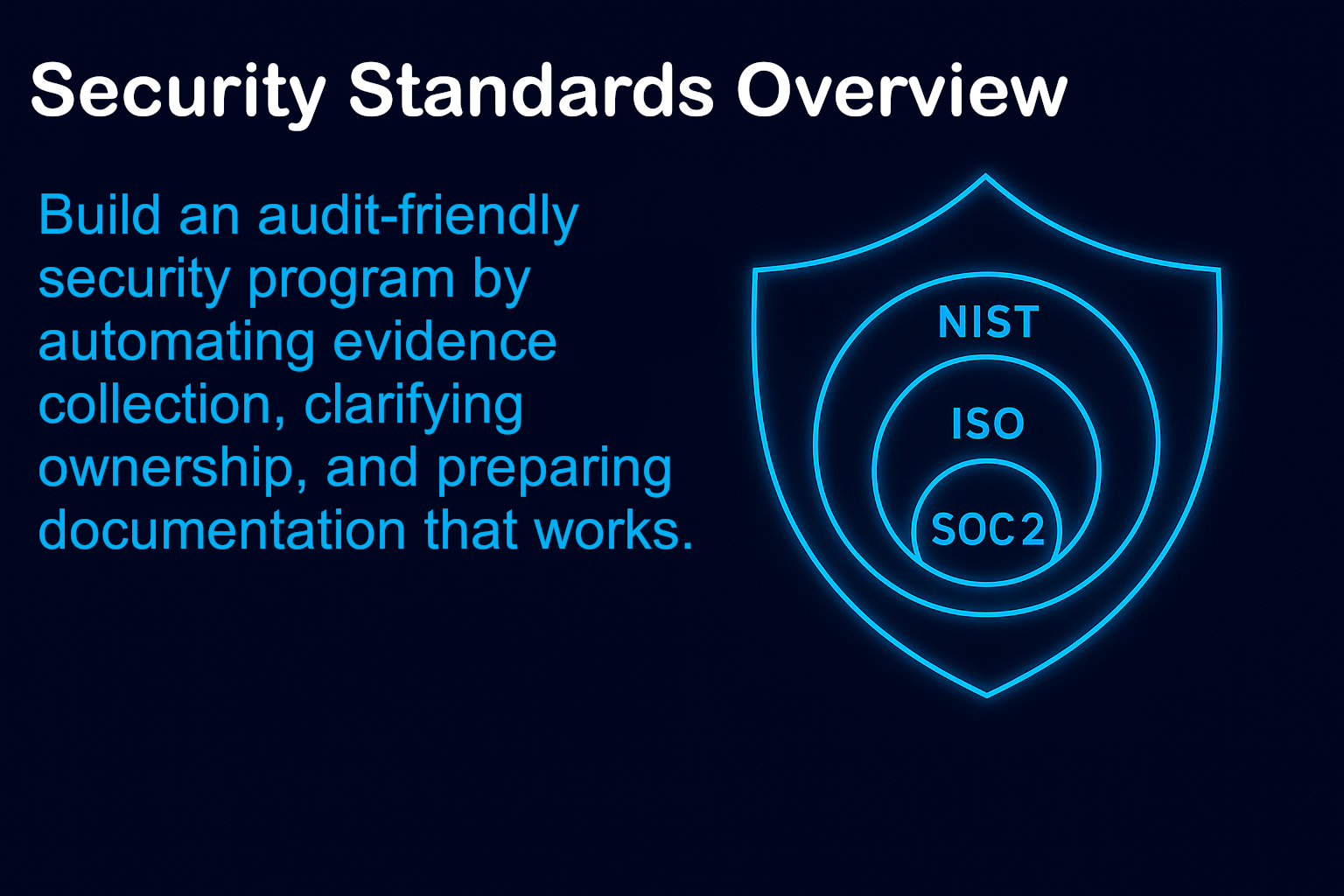 Audit readiness isn’t about scrambling the week before fieldwork—it’s about building security processes that naturally produce the right evidence over time. If your controls are real, maintained, and monitored, you won’t need to fake anything. You’ll just need to present it clearly.
This post walks through how to prepare for audits with confidence—focusing on what auditors truly care about, how to avoid last-minute chaos, and how to build systems that make evidence easy.
📋 What Auditors Actually Want
Contrary to popular belief, auditors don’t want binders of policy PDFs. They want:
- Proof that your controls exist (e.g., screenshots, logs, change records)
- Proof that your controls operate (e.g., alert histories, backup logs, approval workflows)
- Proof that someone owns and maintains them (e.g., tickets, signoffs, reviews)
If your controls are effective and consistently enforced, the evidence will come naturally from your operations.
📦 Build Evidence Into the Workflow
Rather than “collecting evidence” at audit time, embed it into your daily systems:
- Use version-controlled policy repositories (e.g., GitHub) with commit history
- Log access approvals in ticketing systems (e.g., Jira, ServiceNow)
- Capture screenshots or PDF exports from your SIEM or cloud console
- Set calendar reminders for recurring reviews or control tests
Most audit-ready programs don’t feel like they’re “doing compliance”—they’re just doing disciplined operations.
📁 Organize for Presentation
Even if you have good evidence, poor organization leads to rework and delays. Maintain an “audit binder” (digital or physical) that includes:
- Control matrix with cross-references
- Policies and procedures (latest versions)
- Evidence artifacts, screenshots, and exports
- Contact list of control owners
Some orgs use GRC platforms; others build structured folders. What matters is clarity and completeness.
🧠 Bonus: Treat Auditors Like Partners
Engage early. Be honest about gaps. Ask questions. Most auditors are there to assess—not attack. If you understand their objectives and speak their language (controls, effectiveness, maturity), the process becomes collaborative, not adversarial.
📣 Final Thought
Audit readiness is a side effect of operational discipline. If you maintain control ownership, automate evidence, and document what matters, audits stop being fire drills—and become opportunities to improve.
Want help preparing for your next ISO 27001, SOC 2, or NIST audit—without the last-minute scramble? Let’s talk.