
🧠 Social Engineering Unmasked
By James K. Bishop, vCISO | Founder, Stage Four Security
🔍 What This Series Covers
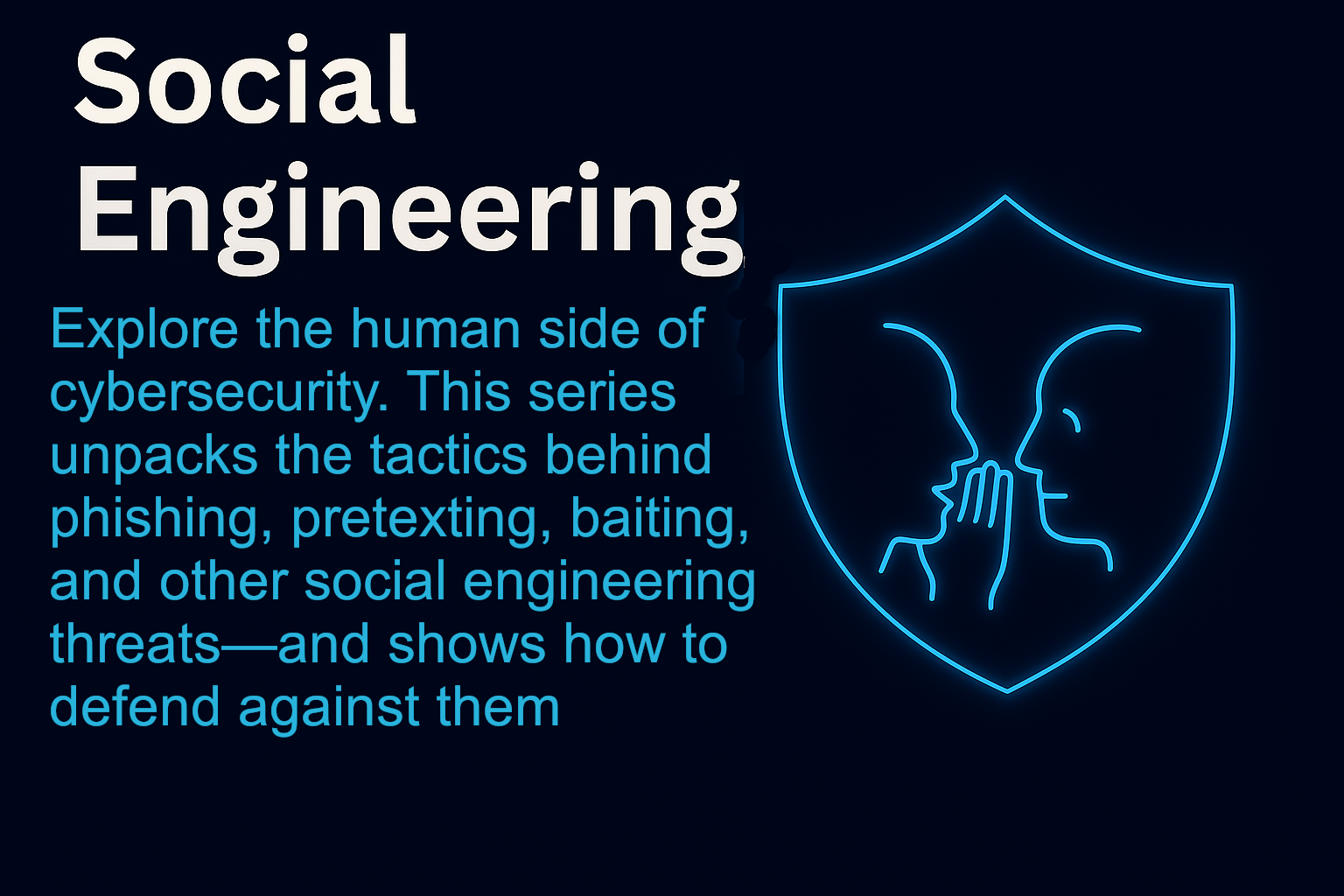 Social engineering isn’t a technical exploit—it’s a psychological one. Attackers manipulate human behavior to bypass even the best security controls. Whether it’s phishing emails, phone scams, or physical intrusions, human error remains the top threat vector.
This series breaks down the mechanics behind social engineering, explores real-world attacks, and shares proven defenses to help teams recognize and resist manipulation. Whether you’re a security trainer, incident responder, or executive, these posts are designed to raise awareness and strengthen your human firewall.
📚 Featured Topics
- Phishing and smishing: Email, SMS, and mobile-based deception techniques
- Pretexting and impersonation: How attackers build believable lies to extract data
- Baiting and quid pro quo: Enticing victims into risky behavior with promises or favors
- Tailgating and physical social engineering: When the human layer breaks physical security
- Human-focused defense strategies: Awareness programs, simulations, and training best practices
📖 Articles in This Series
📨 Phishing Attacks: Identifying and Preventing Deceptive Communications
Learn how phishing campaigns work, how to recognize them, and how to defend against increasingly sophisticated lures.
🎭 Pretexting: Understanding Fabricated Scenarios Used to Extract Information
Explore how social engineers craft believable backstories to manipulate employees and breach confidentiality.
🎁 Baiting and Quid Pro Quo: Recognizing and Mitigating Enticement-Based Attacks
Discover how attackers use flash drives, fake rewards, and offers of help to trick users into compromising systems.
🚪 Tailgating and Physical Intrusions: Securing the Human Entry Point
Understand how attackers exploit physical security weaknesses to gain unauthorized access to secure spaces.
🛡️ Defensive Strategies: Building a Human Firewall Through Awareness and Training
Learn how to build lasting resilience through phishing simulations, culture change, and targeted awareness programs.
📣 Final Thought
Security awareness isn’t optional—it’s foundational. In a world where attackers exploit trust more than technology, empowering people is the most effective form of defense. Social engineering may start with a conversation, but it ends in compromise—unless your people know what to do.
Need help designing effective awareness campaigns, phishing simulations, or executive training? Let’s talk.