
⚖️ Security vs. Compliance: Why Checkboxes Aren’t Enough
By James K. Bishop, vCISO | Founder, Stage Four Security
🧩 Two Goals, One Mission—But Don’t Confuse Them
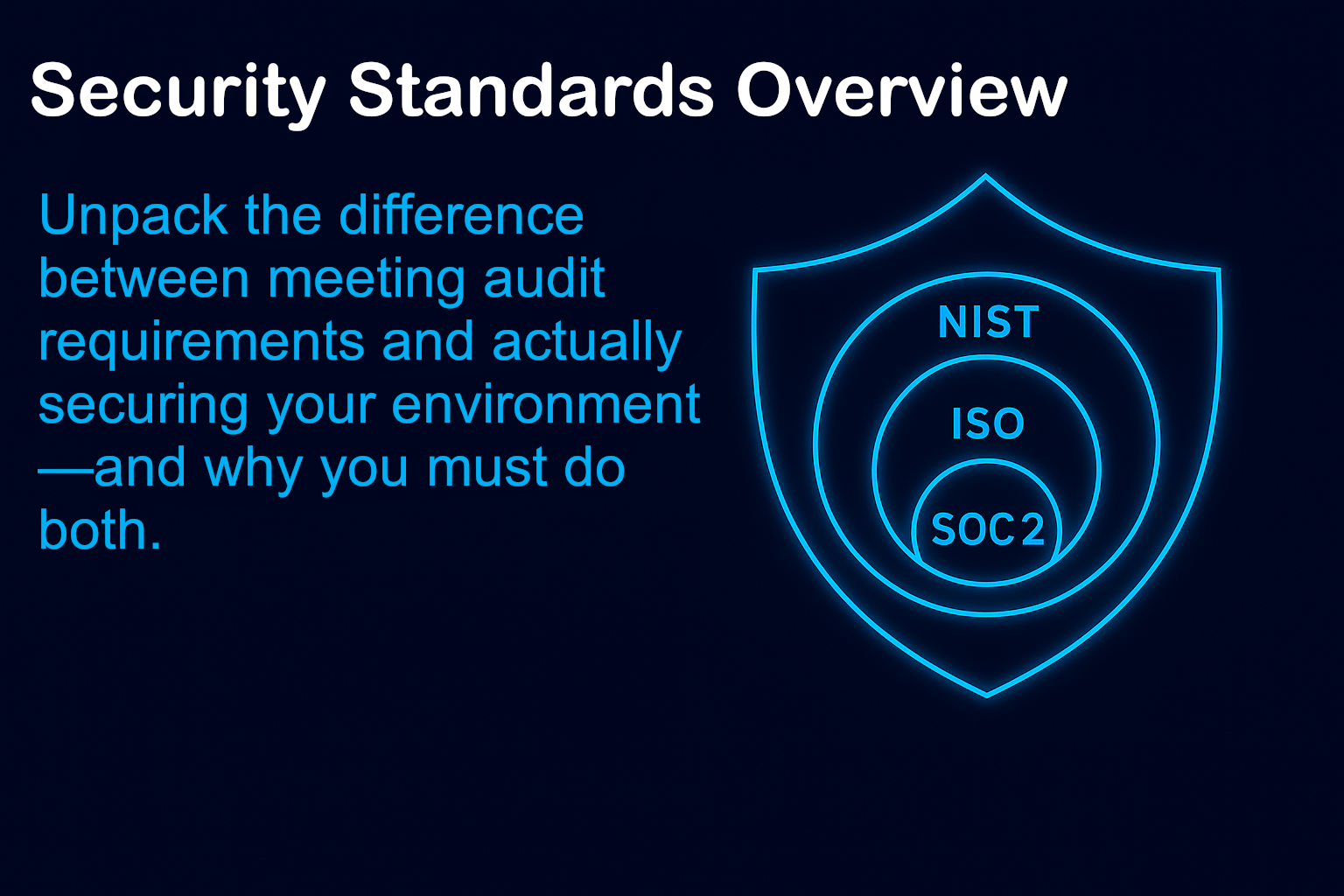 Compliance means you’re following a set of defined rules or standards. Security means you’re actively protecting systems, data, and people from threats. The two often overlap—but they are not the same. Treating compliance as the finish line leads to a false sense of safety and missed vulnerabilities.
This post explores how to balance security and compliance in your organization—so you can both satisfy auditors and stop real-world threats.
📄 Compliance Is a Snapshot. Security Is Continuous.
An audit looks at a point in time. A security program is dynamic, responsive, and constantly evolving. Just because you passed an audit doesn’t mean your systems are secure today.
Threats change. Risks change. Compliance frameworks evolve slowly—attackers don’t.
🔍 When Compliance Creates Risk
- Box-checking behavior: Implementing controls “just enough” to pass, without real operational effectiveness.
- Control overkill: Deploying complex tools just to meet requirements—while ignoring simpler, more impactful protections.
- Neglected environments: Teams over-focus on audit scope and leave non-in-scope systems exposed.
Audits are necessary—but they’re not a replacement for a threat-informed, risk-based approach to defense.
📚 Aligning the Two: Where Compliance Helps Security
When done right, compliance frameworks can support strong security by:
- Providing structure and accountability
- Helping secure executive buy-in and budget
- Encouraging documentation, process discipline, and review cycles
Standards like NIST CSF and CIS Controls are designed to support continuous improvement—not just pass/fail results.
🧠 Focus on Control Effectiveness, Not Control Count
Don’t ask “Do we have a backup policy?” Ask: “Is our backup strategy working, tested, and aligned with recovery needs?”
Security programs should test control efficacy, not just document existence. That’s where tools like tabletop exercises, red teaming, and continuous monitoring add real value beyond the compliance checklist.
📣 Final Thought
Compliance is necessary, but not sufficient. True resilience comes from programs that treat standards as starting points—not finish lines.
Need help designing a program that satisfies auditors and defends against actual threats? Let’s talk.