
📊 Choosing the Right Framework: NIST, ISO, CIS, SOC 2, or All of Them?
By James K. Bishop, vCISO | Founder, Stage Four Security
🧭 One Size Doesn’t Fit All
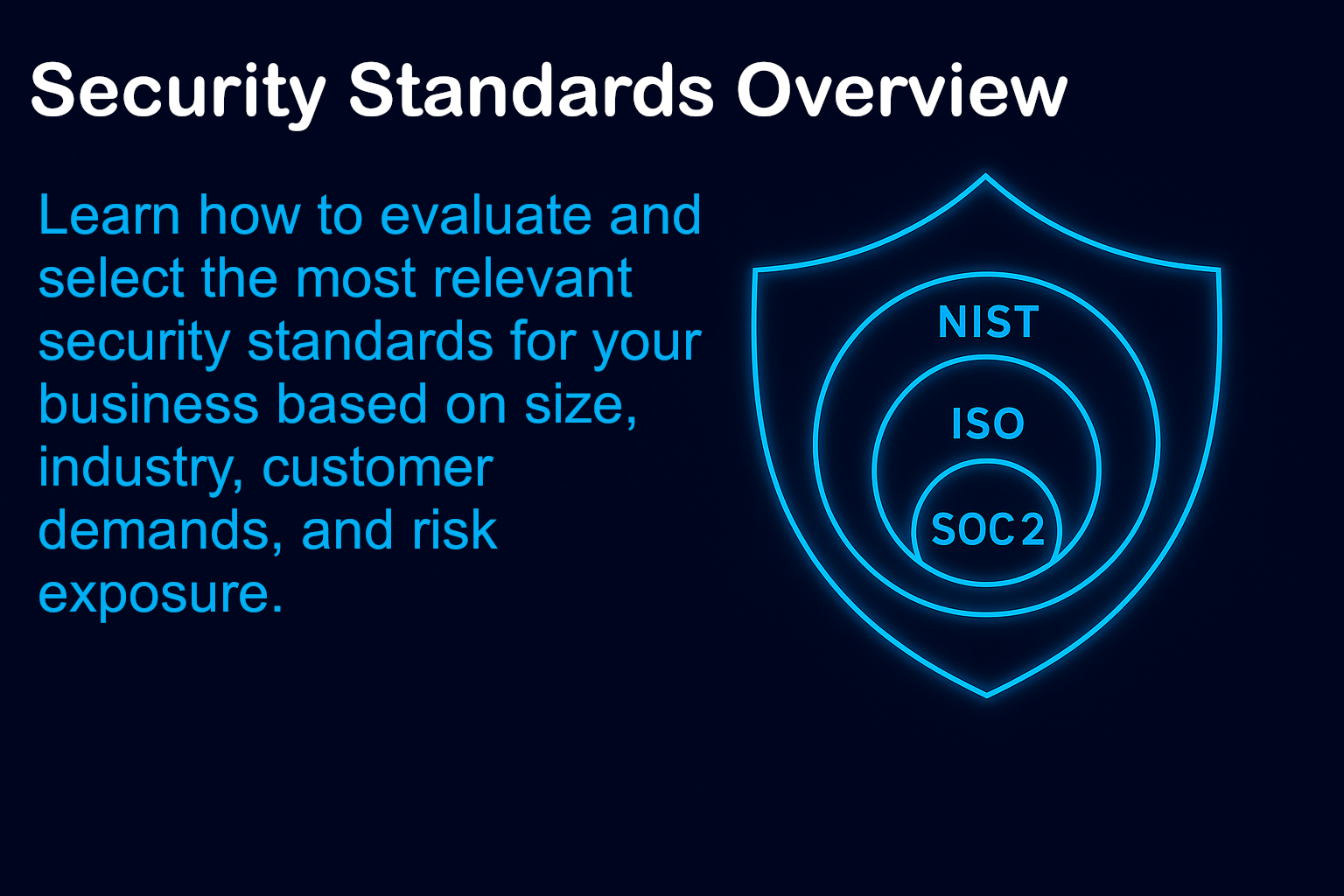 The cybersecurity landscape is crowded with standards—NIST CSF, ISO/IEC 27001, SOC 2, CIS Controls, and many more. While they often overlap, they’re not interchangeable. Choosing the right framework isn’t about popularity—it’s about purpose, scope, and alignment with your organization’s risk profile and business goals.
This post breaks down the major standards and offers guidance on how to choose the one(s) that make the most sense for your environment.
📚 The Most Common Frameworks Explained
- NIST Cybersecurity Framework (CSF): Risk-based and flexible. Great for public/private sector orgs that want a strong baseline across identify, protect, detect, respond, and recover.
- ISO/IEC 27001: Globally recognized standard for building and managing an Information Security Management System (ISMS). Often required for international business and data protection assurance.
- SOC 2: Designed for SaaS providers and service organizations. Focuses on trust principles like security, availability, and confidentiality. Highly relevant for U.S.-based companies selling B2B software.
- CIS Controls: Prioritized, actionable technical controls. Often used as a tactical implementation layer to support other frameworks.
🧩 How to Choose What’s Right for You
Rather than choosing a framework based on industry buzz or compliance pressure alone, ask:
- What are my regulatory obligations (e.g., HIPAA, GDPR, CCPA)?
- What markets or customer segments do I serve?
- Do we need to demonstrate assurance to auditors, investors, or partners?
- How mature is our security program today?
For example: a cloud-native SaaS startup might start with SOC 2 for customer trust and later add ISO 27001 to expand into Europe. A healthcare provider might start with HIPAA and map controls to NIST or CIS for internal governance.
🔁 Can You Use More Than One?
Yes—many organizations map controls across multiple frameworks using a common control set. For example, ISO 27001 and NIST CSF both support layered security programs, while SOC 2 often shares controls with both. You don’t need to reinvent the wheel—just align the standards around your environment and reuse evidence where possible.
💡 Pro Tip: Map Before You Build
If you’re juggling multiple frameworks (or think you will), build a control matrix early. Identify overlaps, gaps, and areas where a single implementation can satisfy multiple requirements.
There are tools, platforms, and services that help automate this process—but a simple spreadsheet is a good place to start.
📣 Final Thought
Don’t chase a certification because it’s trendy—choose a framework that supports your business model, customer demands, and risk landscape. And remember: the best framework is the one you can actually implement.
Need help choosing, aligning, or mapping multiple security frameworks to your current controls? Let’s talk.