
🌐 Global Compliance: NIS2, APRA, and PIPEDA for Security Teams
By James K. Bishop, vCISO | Founder, Stage Four Security
🌎 Security Beyond the U.S.
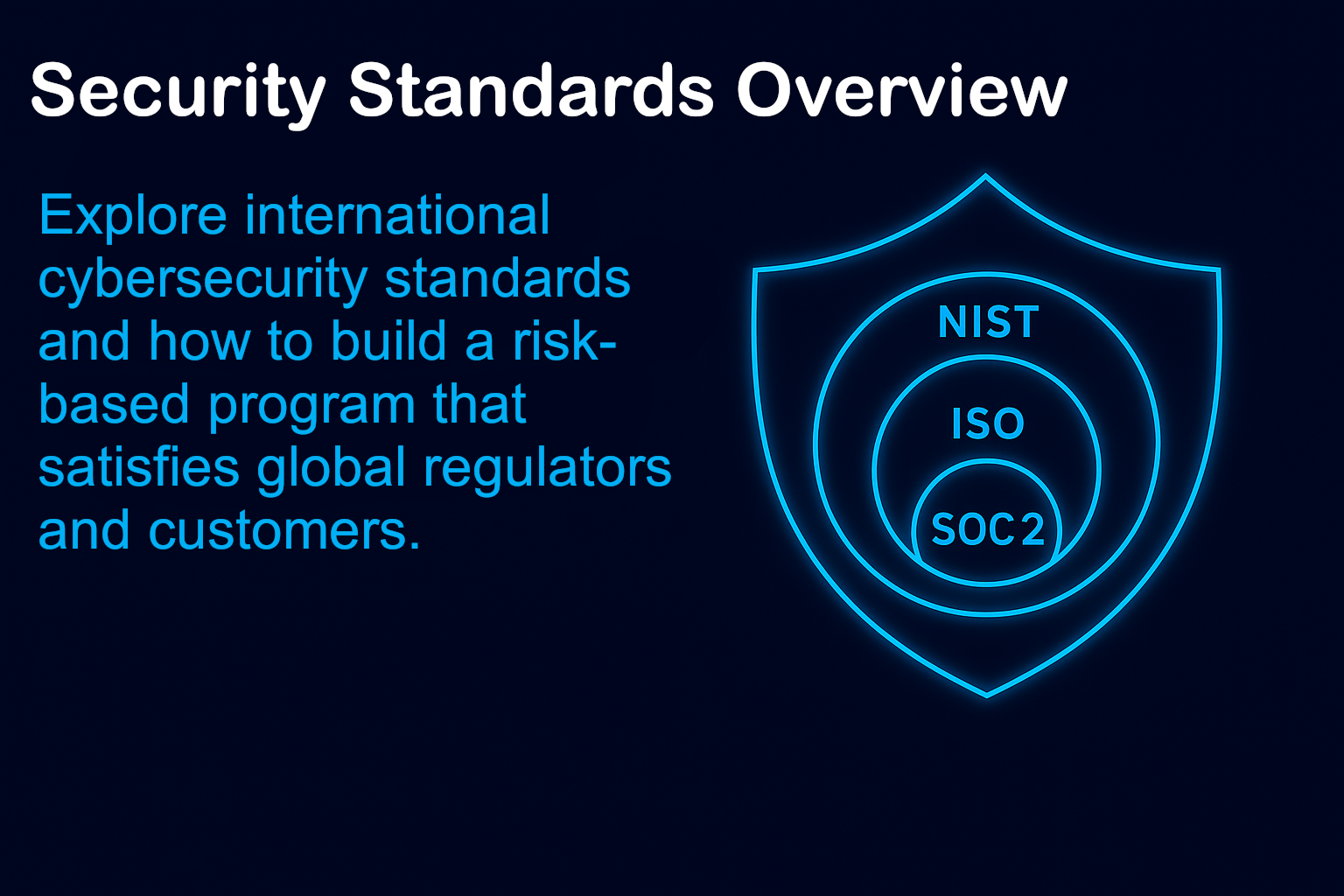 Security and privacy laws are no longer confined to national borders. For companies operating globally—or offering cloud services across jurisdictions—understanding frameworks like NIS2 (EU), APRA CPS 234 (Australia), and PIPEDA (Canada) is critical.
This post breaks down these emerging mandates, showing what they require from security teams in practical terms: controls, reporting, enforcement, and how to stay ahead of compliance requirements that are gaining teeth fast.
🇪🇺 NIS2 – EU Cybersecurity Directive (2024+)
What it is: The successor to the original NIS Directive, NIS2 expands the scope of required cybersecurity practices to more sectors and imposes stricter obligations on critical and essential service providers.
Who it affects: Operators of essential services (energy, finance, healthcare, transportation) and digital infrastructure providers (data centers, DNS, IaaS, cloud providers) across the EU. Applies to non-EU firms offering these services inside the EU.
Key security requirements:
- Comprehensive risk management based on threat exposure
- Strong supply chain security practices
- Encryption, MFA, vulnerability management, incident detection and response
- Mandatory breach reporting within 24 hours to national authorities
Enforcement: EU member states must implement NIS2 into national law by October 2024. Penalties can reach €10 million or 2% of global turnover.
🇦🇺 APRA CPS 234 – Australia’s Financial Sector Security Standard
What it is: A mandatory cybersecurity standard issued by the Australian Prudential Regulation Authority (APRA) for financial institutions.
Who it affects: Banks, credit unions, insurers, and superannuation entities regulated by APRA. Also applies to third-party service providers who handle information assets on their behalf.
Key requirements:
- Formal information security strategy approved by the board
- Security controls proportionate to asset sensitivity and threat landscape
- Clear control ownership across business units and vendors
- Mandatory reporting of security incidents to APRA within 72 hours
- Annual assessment of control effectiveness and compliance readiness
Technical emphasis: APRA requires not just paper compliance but working controls. Expect scrutiny of identity management, data classification, system availability, and vendor integration points.
🇨🇦 PIPEDA – Canada’s Privacy Law with Security Teeth
What it is: The Personal Information Protection and Electronic Documents Act governs how private-sector organizations handle personal information in Canada.
Who it affects: Any commercial entity that collects, uses, or discloses personal data of Canadian residents, unless already governed by provincial equivalents (e.g., Alberta PIPA).
Security-specific obligations:
- Organizations must implement “appropriate safeguards” based on sensitivity, quantity, and format of personal data
- Safeguards must protect against unauthorized access, disclosure, copying, or use
- Mandatory breach notification if there’s a “real risk of significant harm” to the individual
- Retention policies and disposal procedures must be documented and enforced
Note: Canada is currently developing a successor law (Bill C-27, the Consumer Privacy Protection Act) which would introduce stiffer penalties and more detailed technical requirements—stay tuned.
🛠️ Key Takeaways for Security Teams
- Same themes, different terms: Encryption, incident response, vendor oversight, and access control appear everywhere—just under different acronyms.
- Don’t wait for the audit: Many of these laws require breach notification within 24–72 hours. That means incident readiness needs to be tested and documented ahead of time.
- Map to a master framework: Use NIST CSF or ISO 27001 as a foundation, then extend to meet specific global mandates.
Whether it’s APRA in Sydney or NIS2 in Stockholm, the fundamentals are the same—protect data, own your risk posture, and be able to prove it.
📣 Final Thought
Global security regulations are growing sharper and more sector-specific. The burden is high—but so is the opportunity to stand out with a mature, internationally aligned security program.
Need help aligning to NIS2, APRA CPS 234, or PIPEDA without duplicating effort? Let’s talk.